UVA Arts & Sciences Research Report: Creative Direction for a College-Wide Story
Diverse disciplines. Countless discoveries. One story of research across Arts & Sciences. | UVA Arts & Sciences, 2026
How do you tell the story of research across an entire college without losing the people, ideas, and connections that make each discovery meaningful?
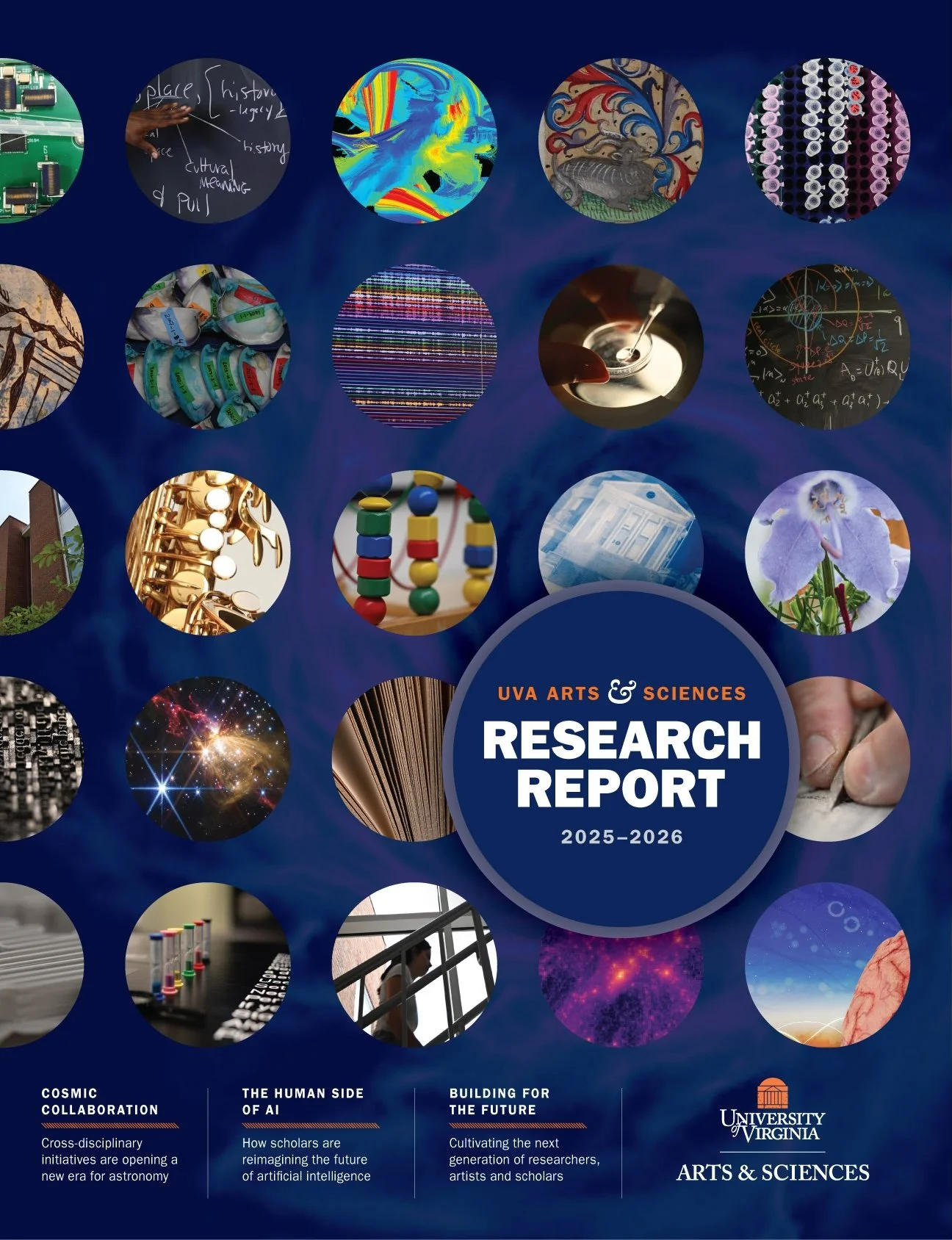
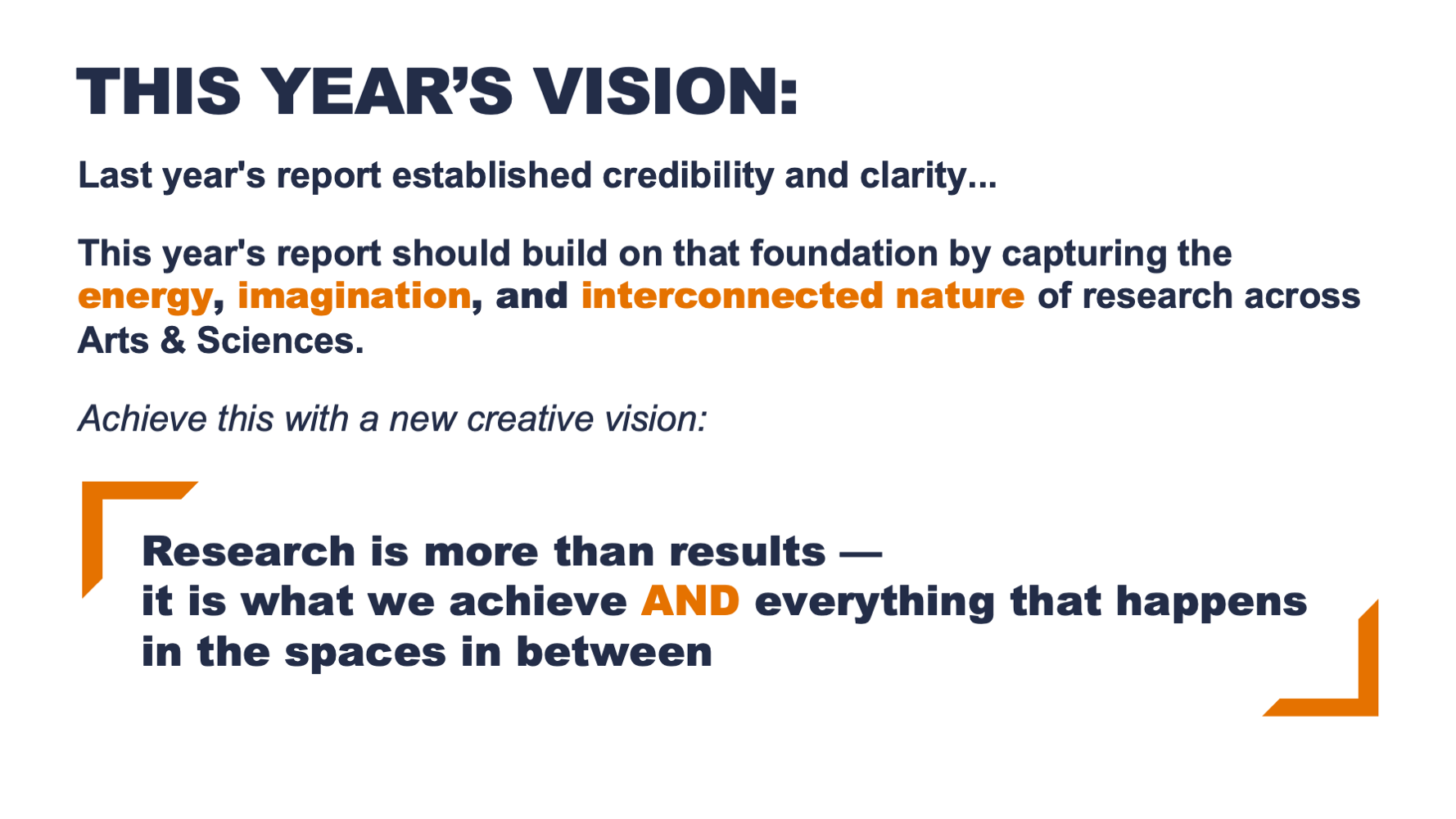
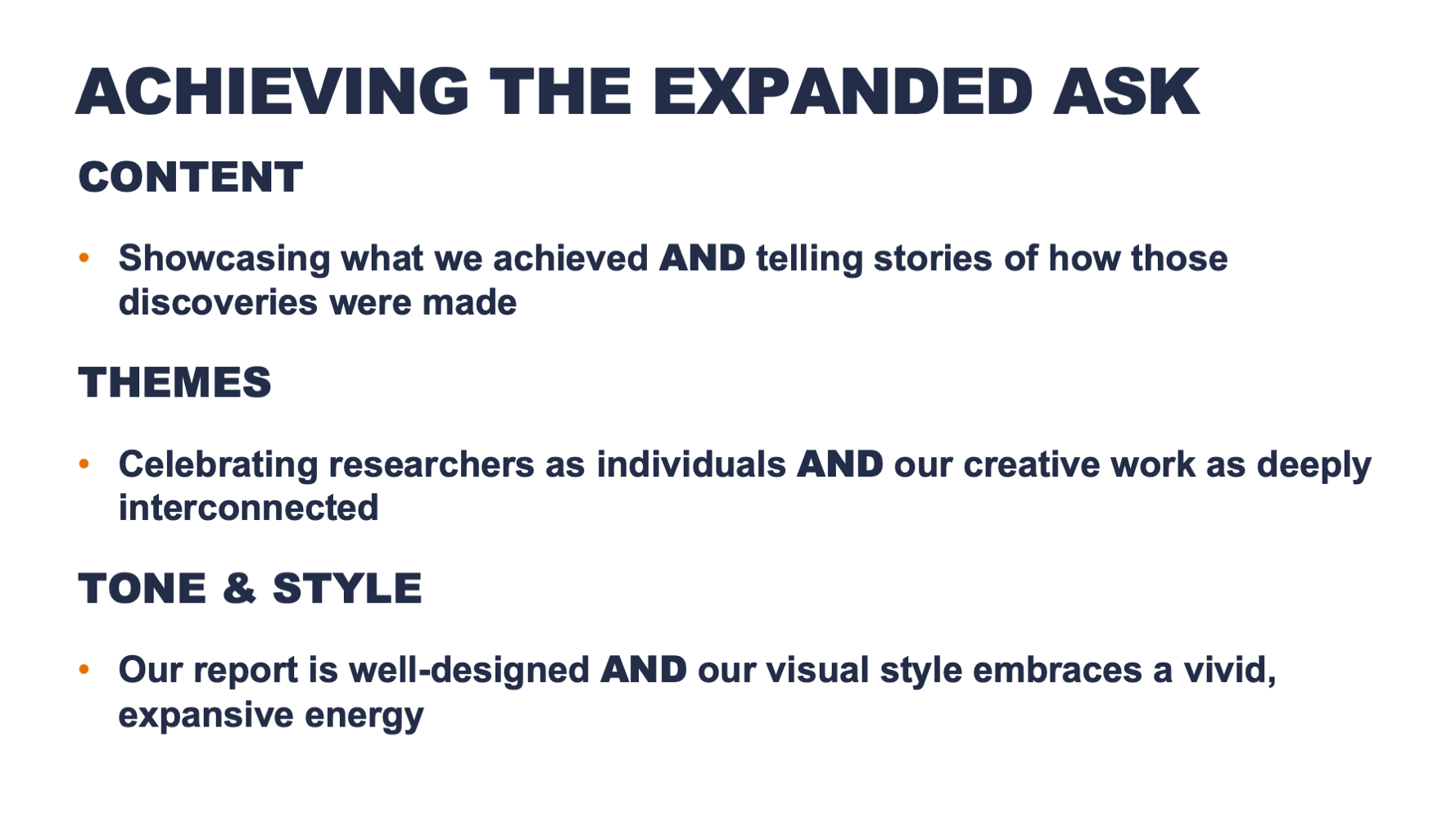
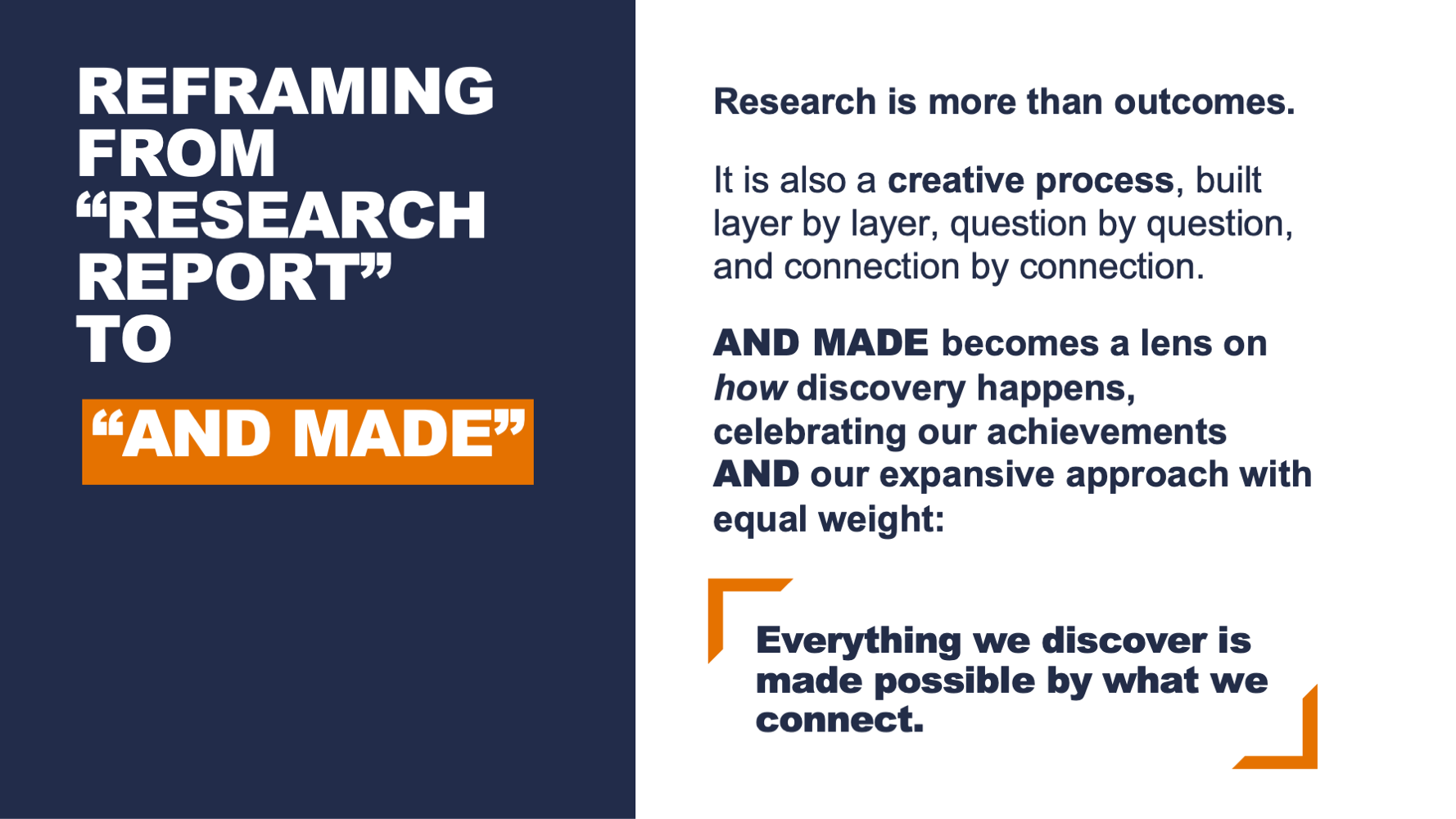
Annual reports often prioritize the measurable outcomes of academic work: grants awarded, discoveries made, and publications produced. But after seeing the research community at Arts & Sciences firsthand, I saw an opportunity to tell a broader story, one that captured not just what researchers accomplish, but the people, ideas, and connections that make discovery possible.
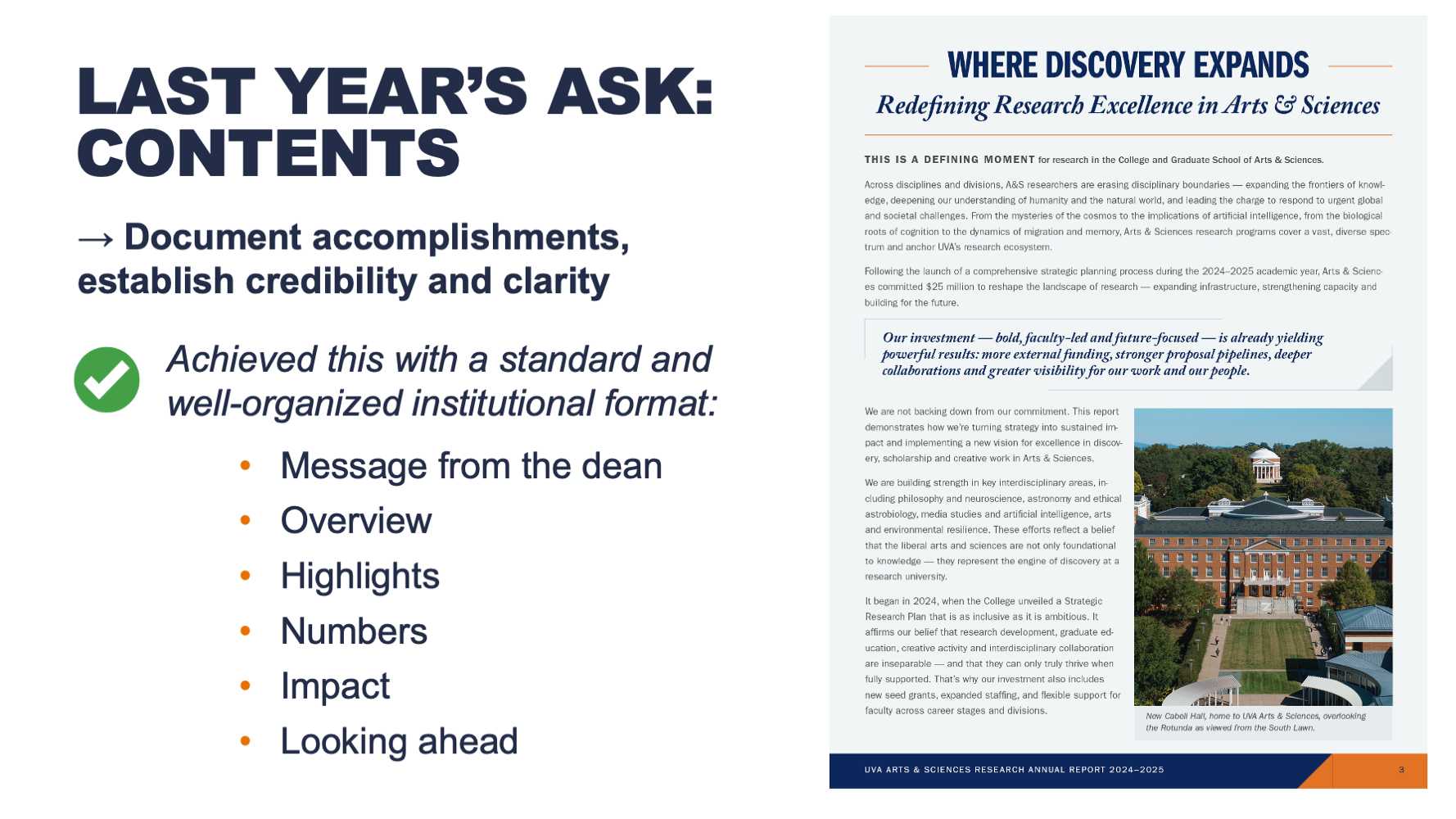
After designing the inaugural UVA Arts & Sciences Research Report in 2025, I returned for its second edition with an ambitious vision to rethink both its editorial approach and visual identity.
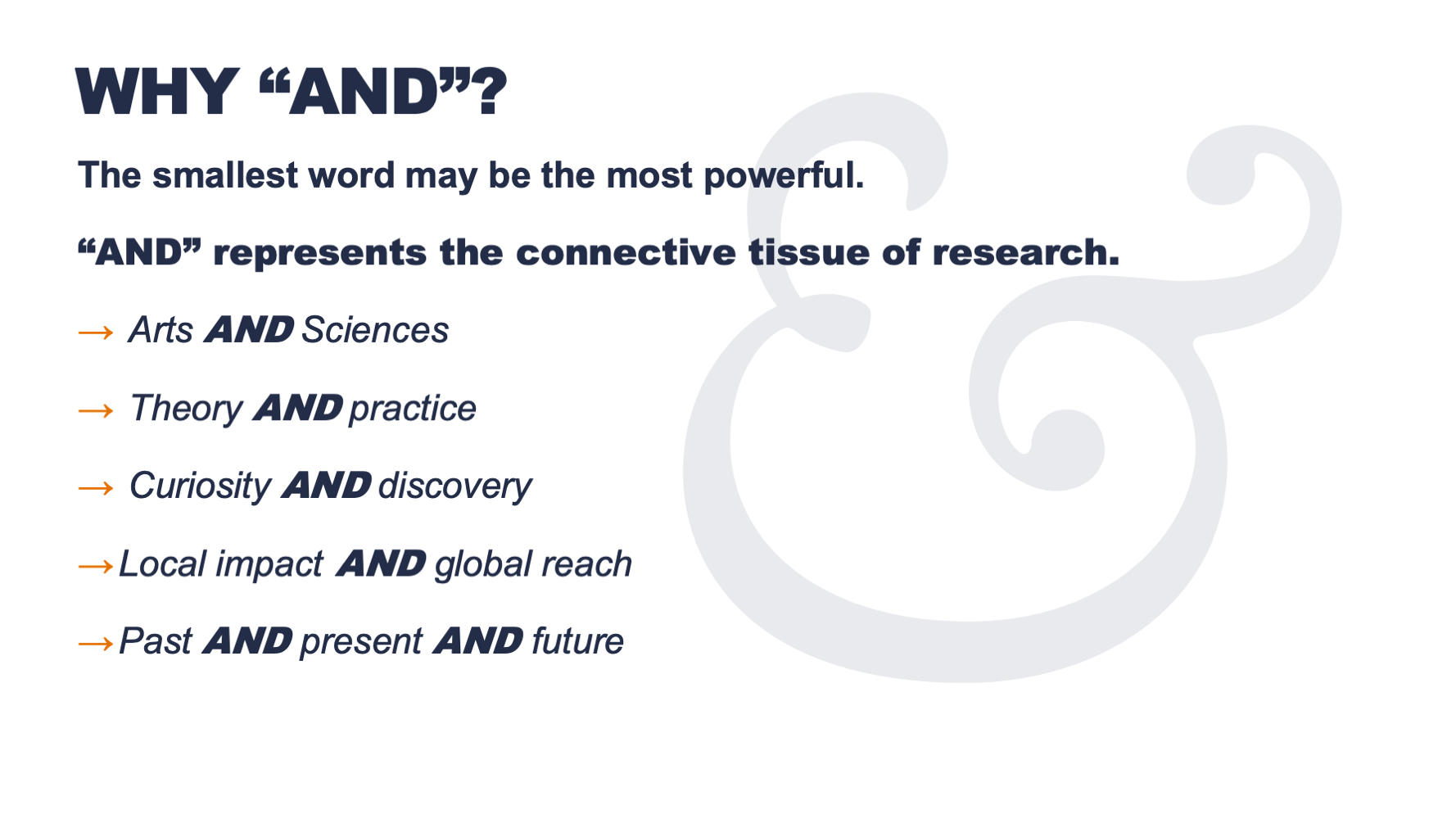
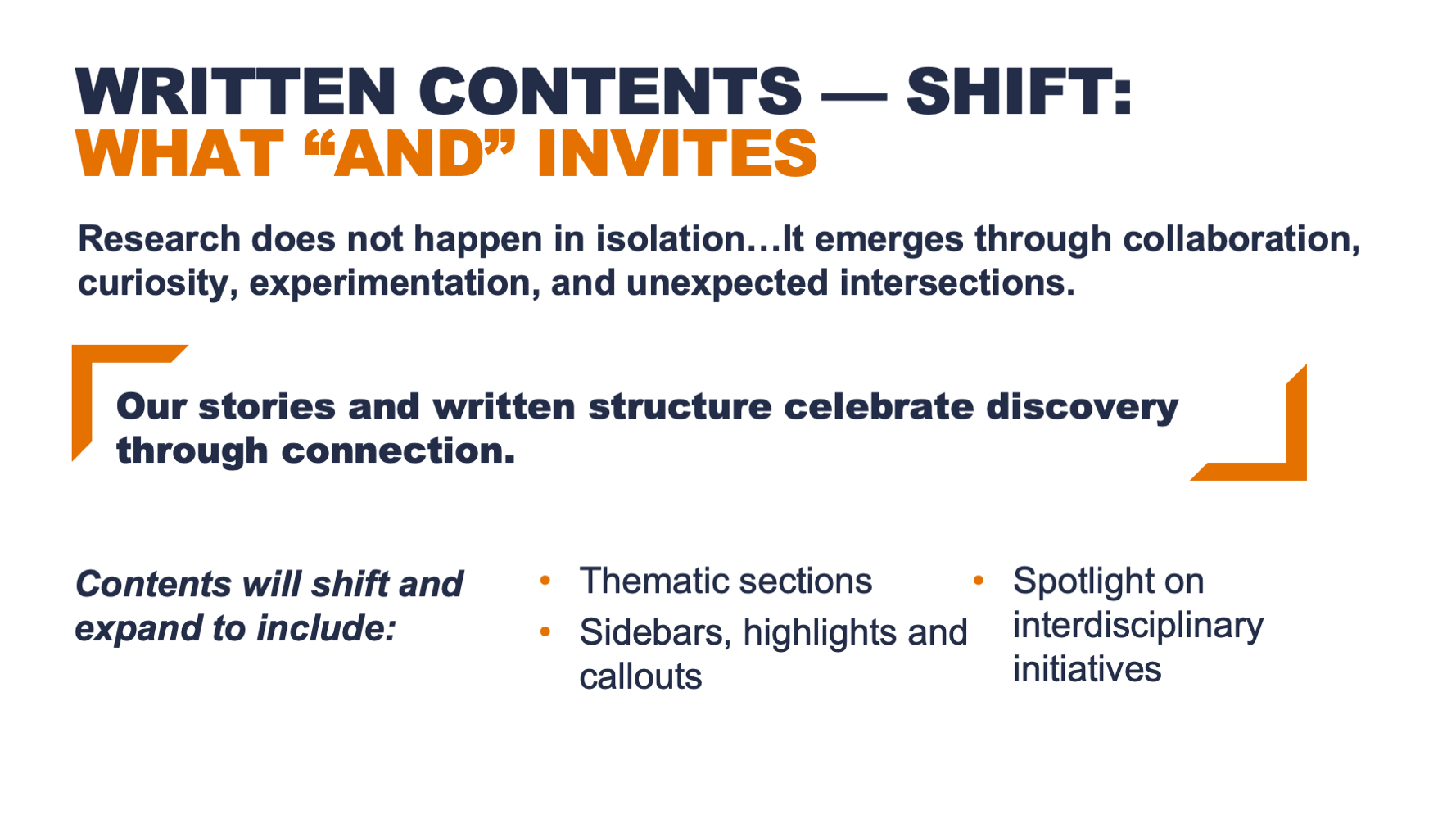
Working closely with Research leadership, I advocated for a new direction that moved beyond documenting accomplishments to tell a more connected, human story of research across the College and Graduate School. I developed a creative concept that framed research not simply as a collection of outcomes, but as an ongoing process of discovery shaped by curiosity, collaboration, and connections across disciplines.
The result was a 55-page publication combining editorial storytelling, original photography, digital illustration, and a flexible visual system to bring the breadth of Arts & Sciences research to life.
Creative Direction: Discovery through connection
I wanted the report's design to reflect the creative, interconnected nature of research itself. My concept explored the relationships that drive discovery: curiosity and experimentation, theory and practice, and the people and disciplines that move knowledge forward together.
I developed and pitched a creative vision that built on the previous year's foundation while expanding the report's narrative and visual possibilities. Working closely with Research leadership and the College's associate deans, I refined the concept through collaborative reviews, presented design directions, and championed a more editorial approach.
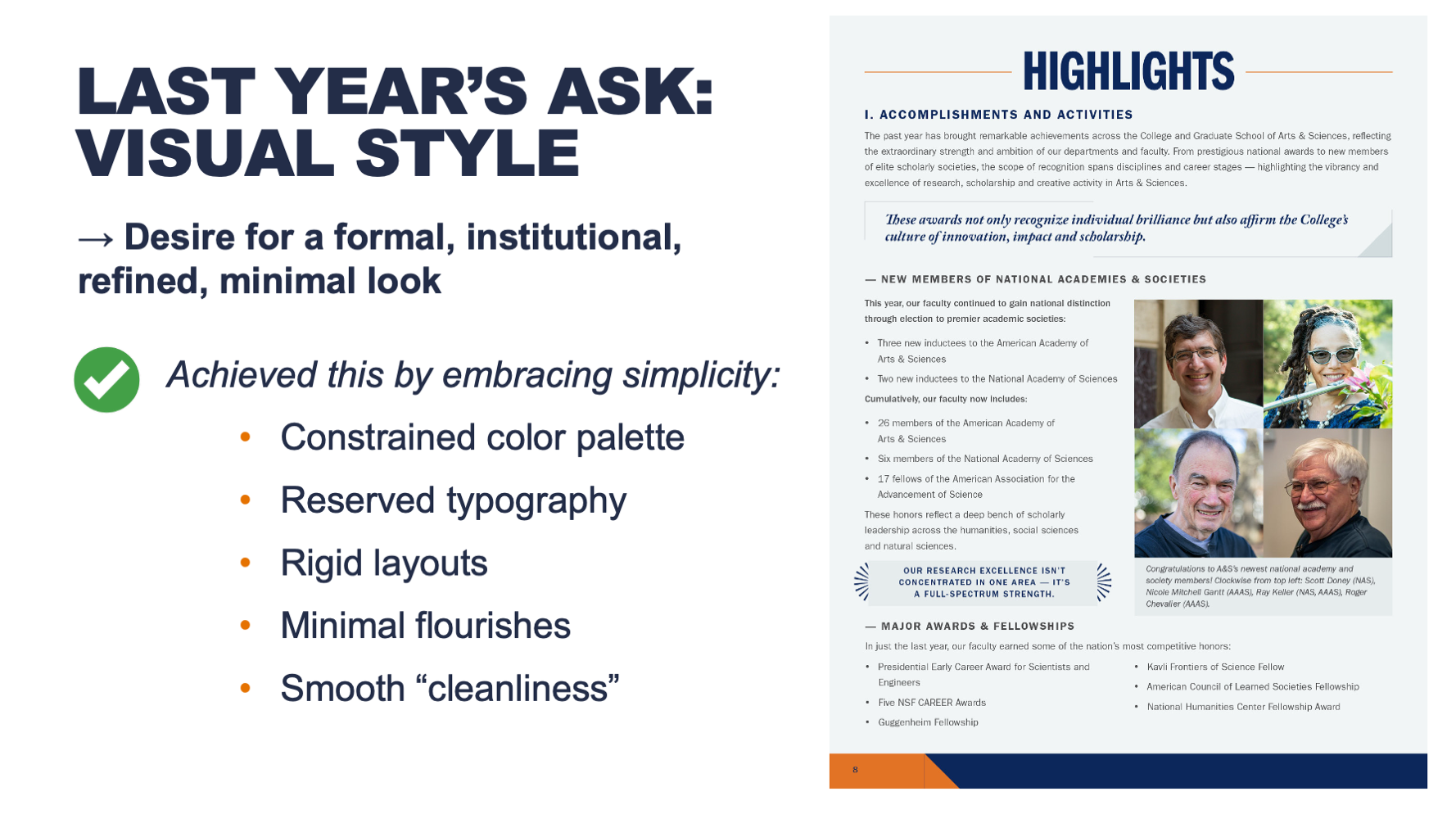
The resulting visual language balanced the credibility of an academic publication with the energy of a magazine. Expressive typography, layered imagery, original illustrations, and a flexible design system gave individual stories room to breathe while connecting them within a cohesive publication.
Editorial Strategy: One system, many kinds of research
Bringing together work from across the incredibly diverse landscape of Arts & Sciences meant balancing a cohesive narrative with the distinct character of each discipline and discovery. Working with senior research writer Russ Bahorsky, we developed an editorial structure that connected individual stories to larger themes, academic strengths, and emerging research priorities.
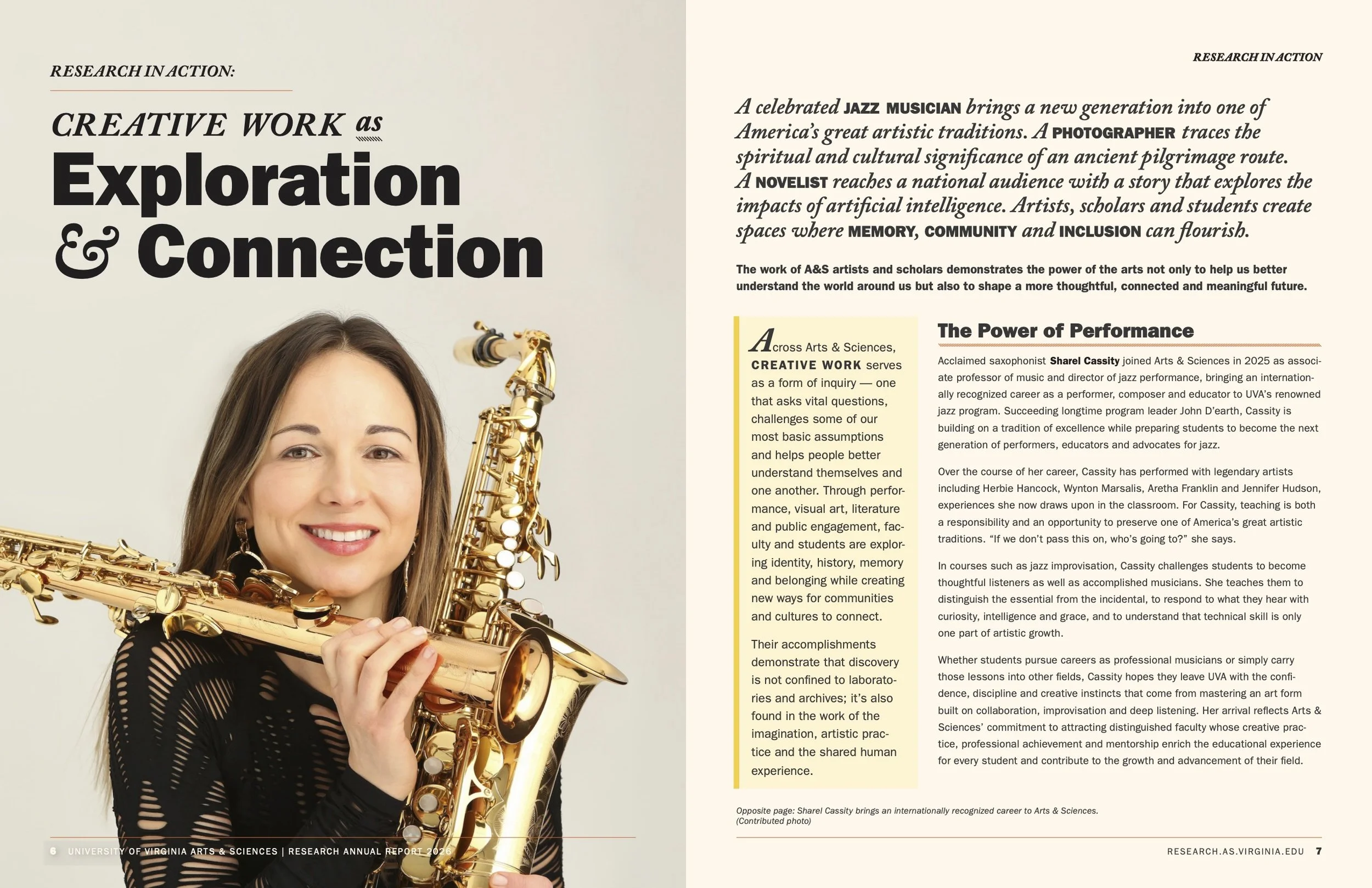
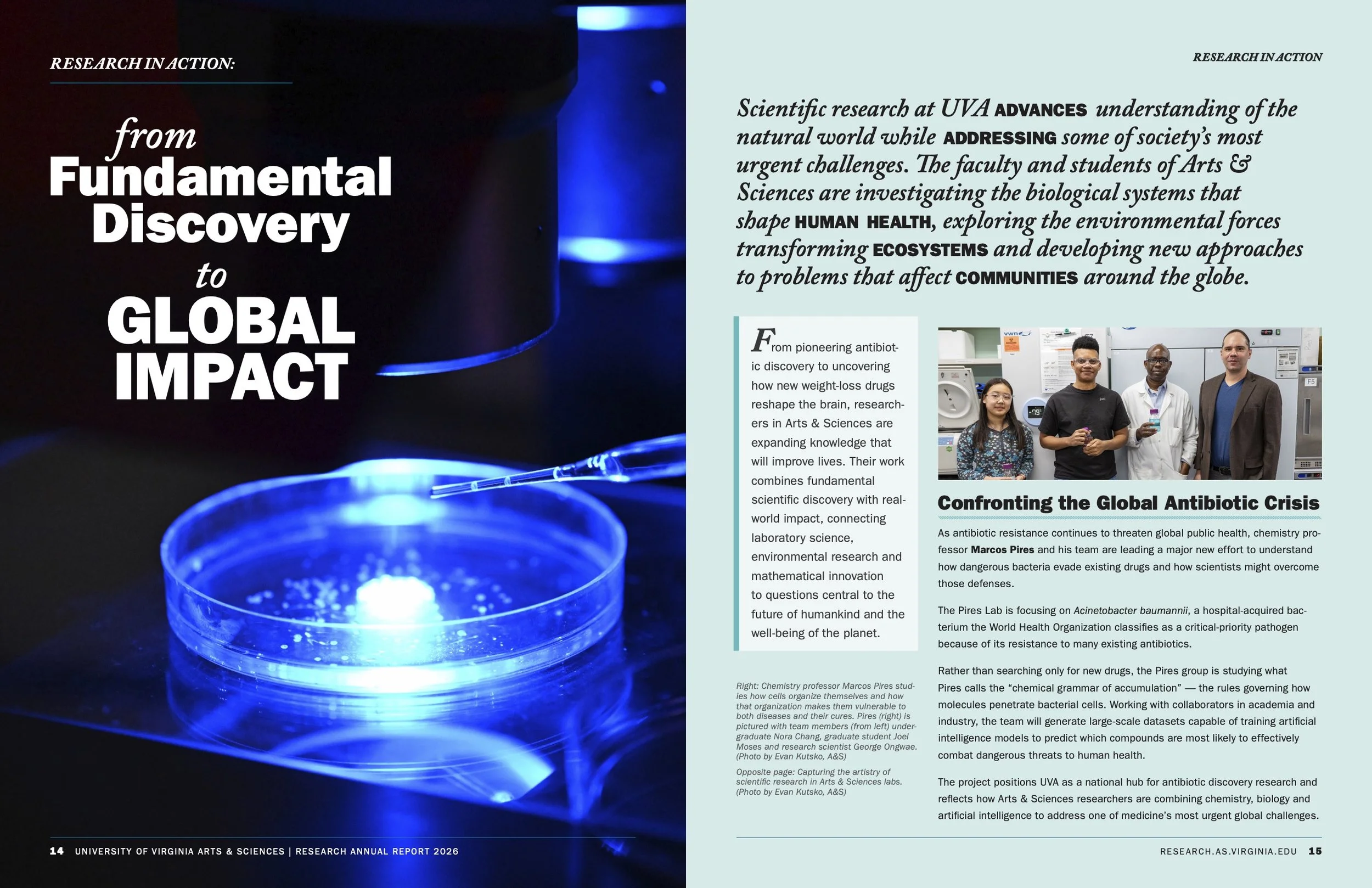
At the heart of the report, five Research in Action sections organize stories around both the breadth and the intersections of research at Arts & Sciences. Three sections reflect the College's academic divisions: Arts and Humanities, Sciences, and Social and Behavioral Sciences. Two more explore cross-disciplinary research in astronomy and artificial intelligence, highlighting how collaboration across traditional academic boundaries is opening new possibilities for discovery.
Each Research in Action section uses a distinct visual treatment and narrative framing to give its subject a sense of identity, while a shared editorial system ties the stories together. From creative work as a form of exploration to scientific discovery with global impact, these sections show how a common structure can accommodate very different kinds of research without making them feel interchangeable.
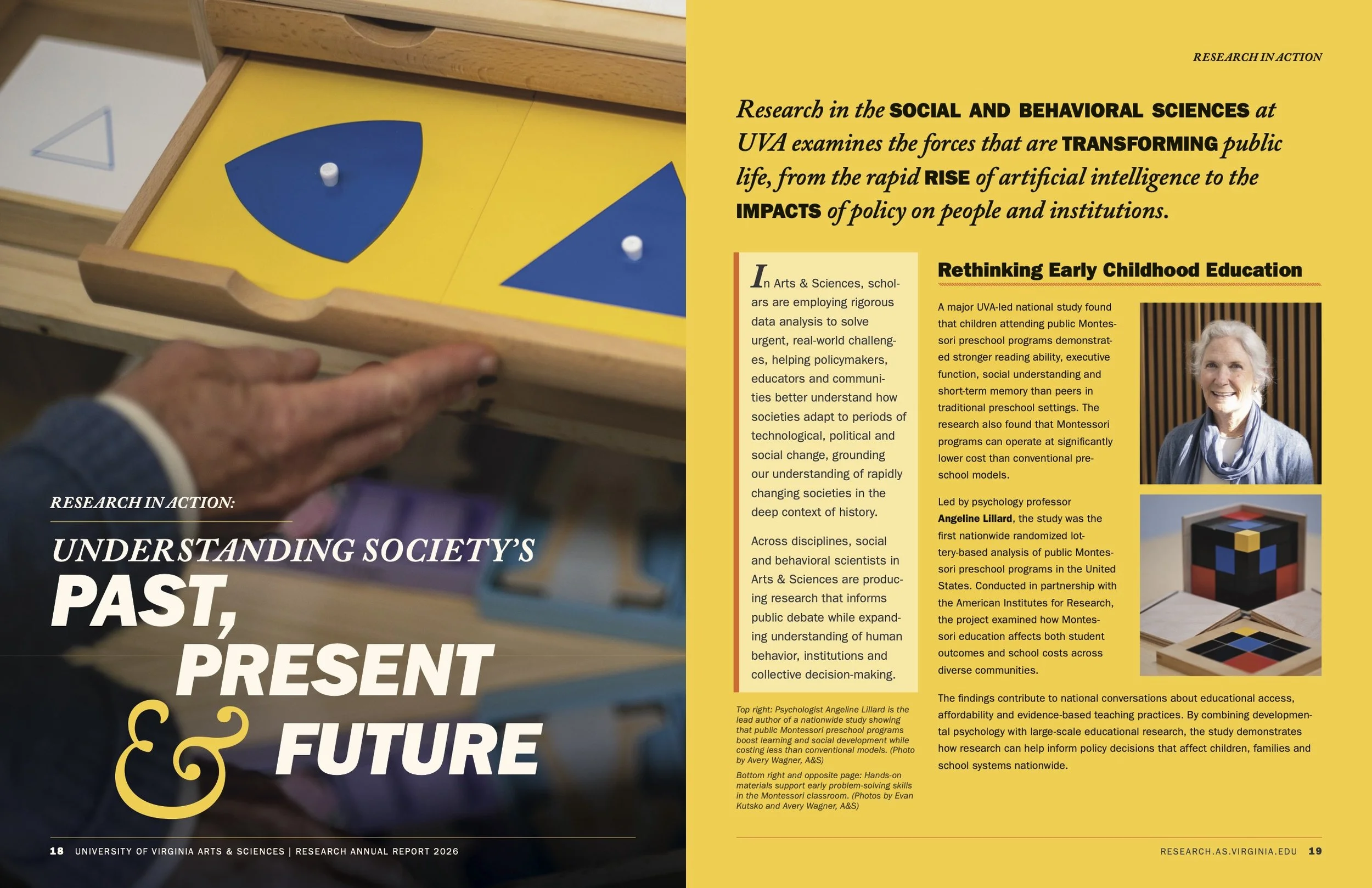
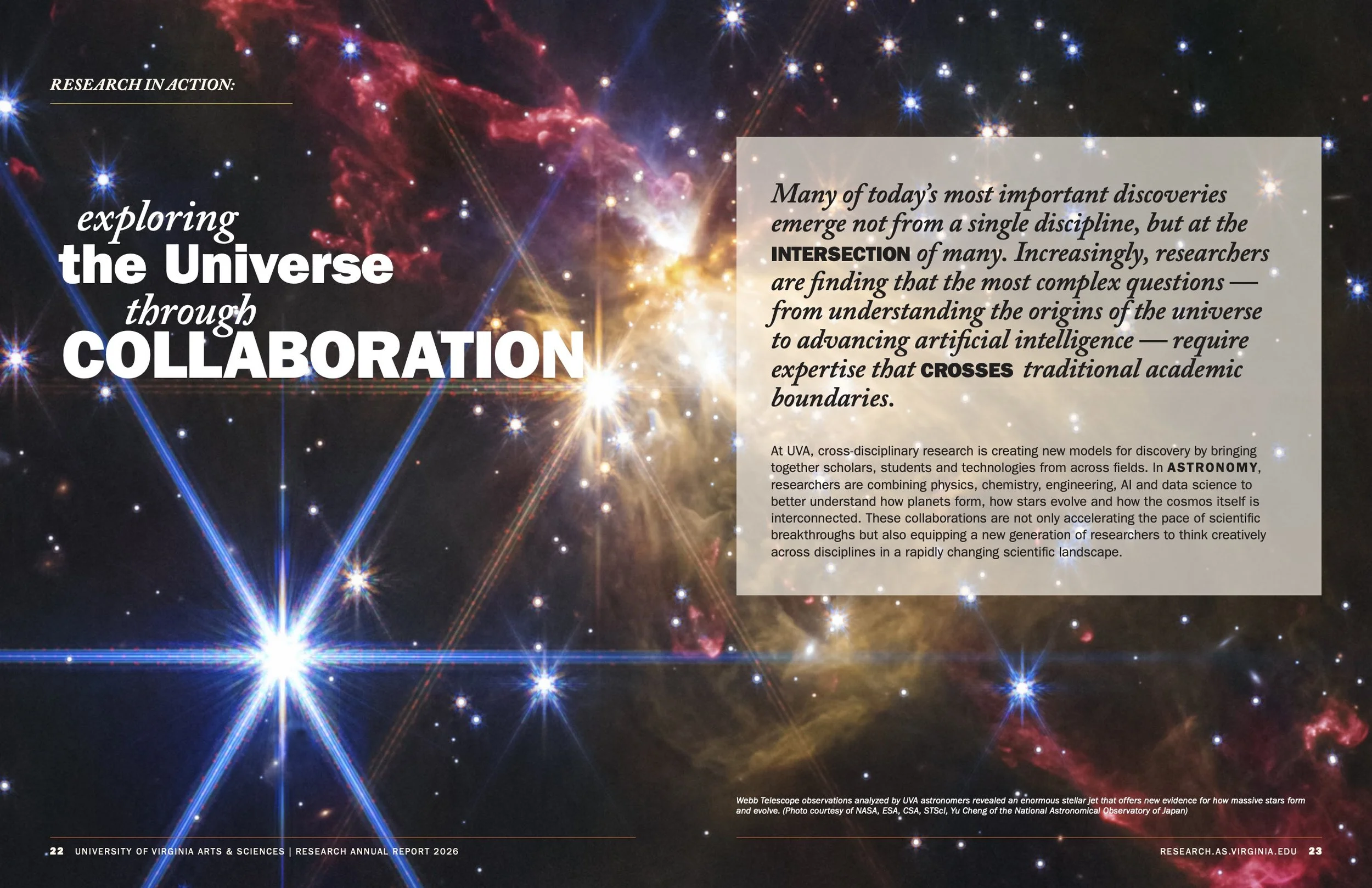
The second half of the report also brings together graduate and undergraduate research, faculty recognition, strategic investments, and the resources supporting future discoveries. Together, these elements balance individual stories with a broader picture of the College's research enterprise, creating a flexible framework that can evolve with future priorities while preserving the character of each edition.
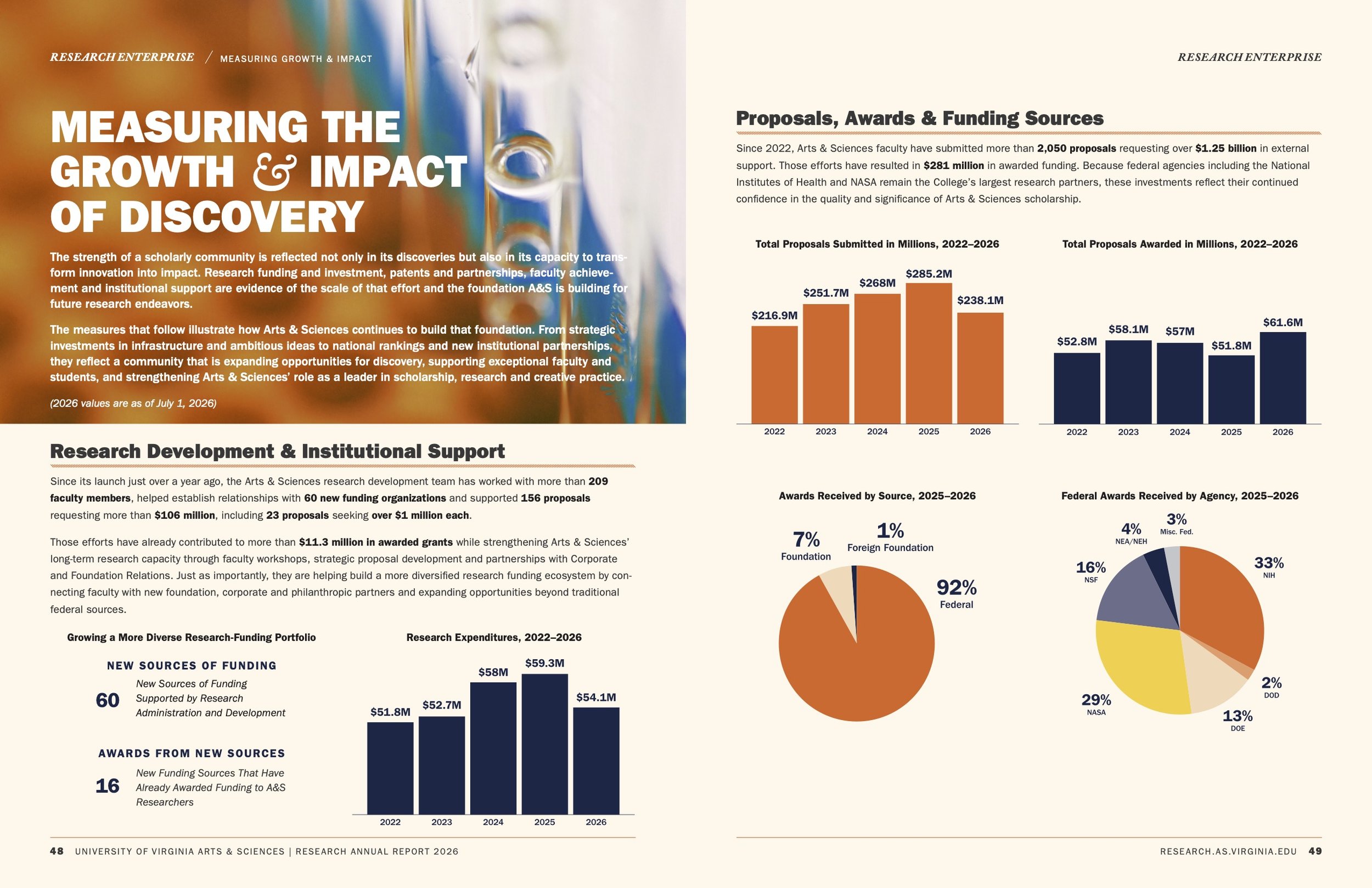
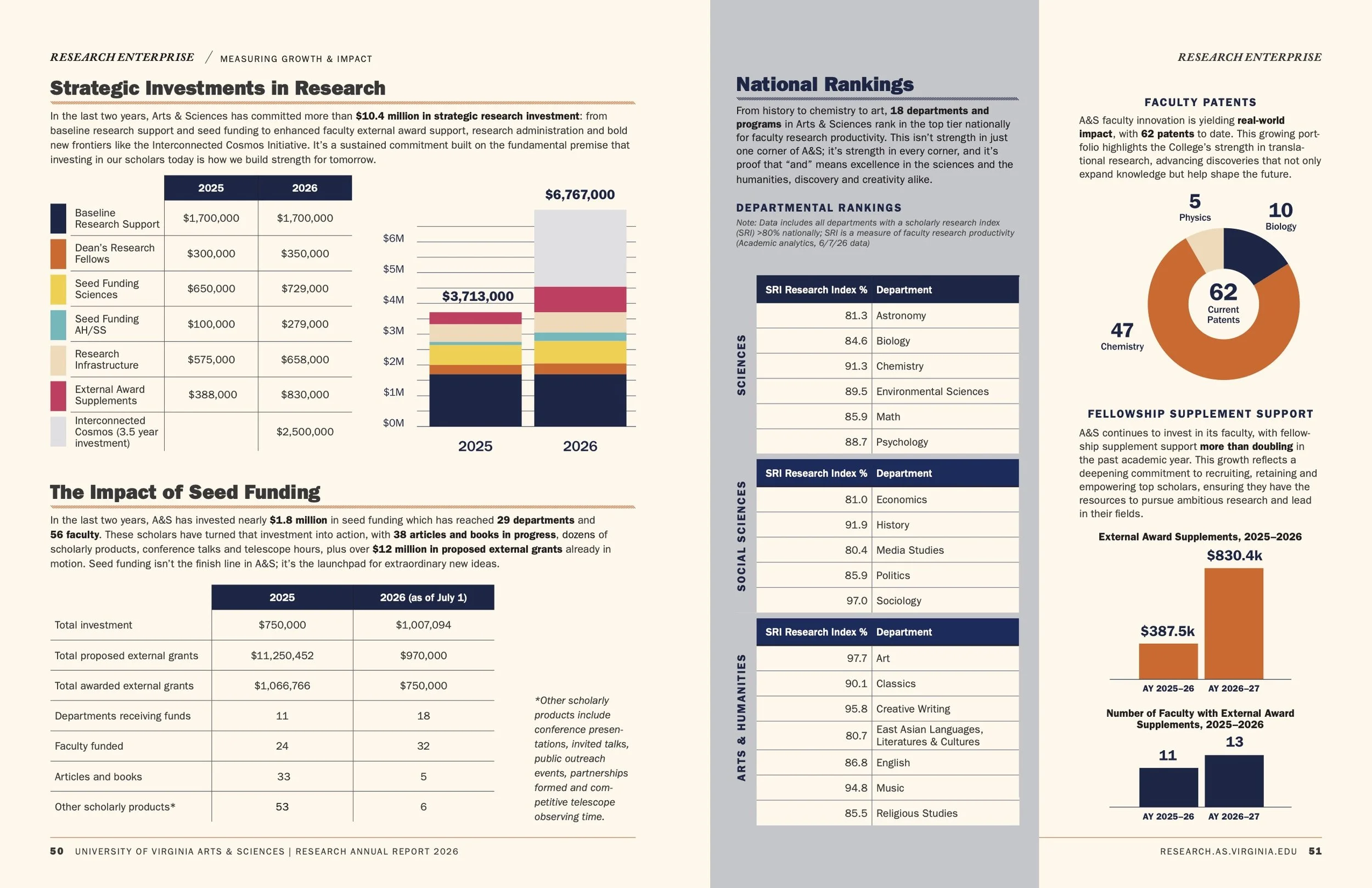
Art Direction & Visual Storytelling: Making discovery visible
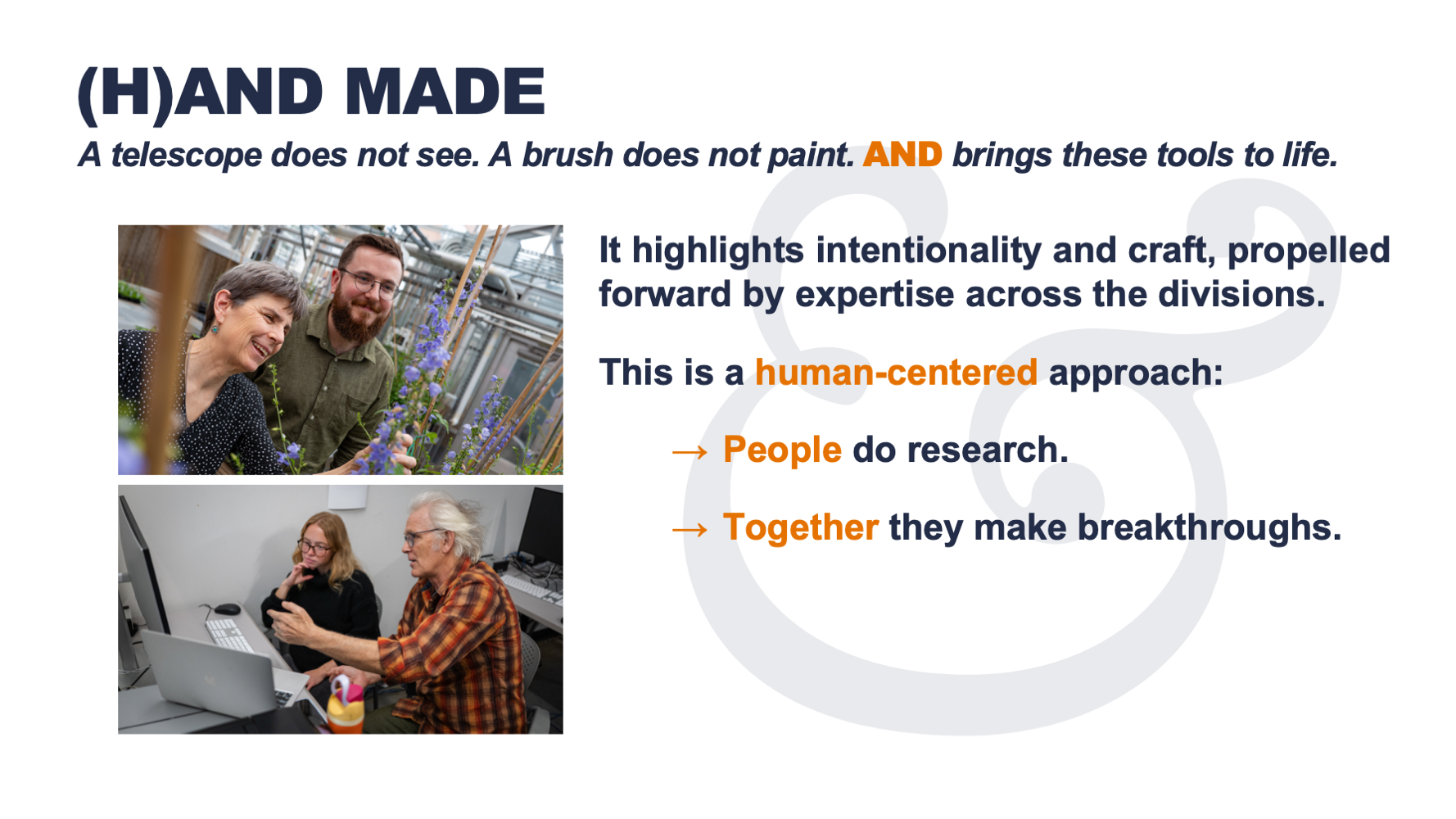
I wanted the visual experience to reflect research as a creative, human endeavor. That meant looking beyond conventional academic photography to find images, details, and artifacts that could draw readers into the work itself.
Working with photographer Evan Kutsko, I art-directed photography across a wide range of disciplines, looking for moments that revealed the people, experimentation, and collaboration behind discovery. I also contributed original photography and created digital illustrations and collages, incorporating archival imagery and visual materials from researchers and departments to make complex ideas more tangible.
Across the publication, expressive typography, layered imagery, and varied page compositions create a cohesive visual language without making every story look the same. Immersive photographic spreads, illustrated features, concise highlights, and data-driven layouts each offer a different way into the research.
Photography: Finding the human story
For the Next Generation of Discovery feature, I worked with Evan to capture the hands-on collaboration, learning, and problem-solving that connect undergraduates, graduate students, and faculty across generations of research.
Art direction for photography focused on finding unexpected angles and details that draw the viewer into the imagination and energy of research. In the above spread, Evan’s masterful photos capture the human interaction, learning, and creativity that fuel the next generation of discoveries.
Artifacts: Letting the research supply the imagery
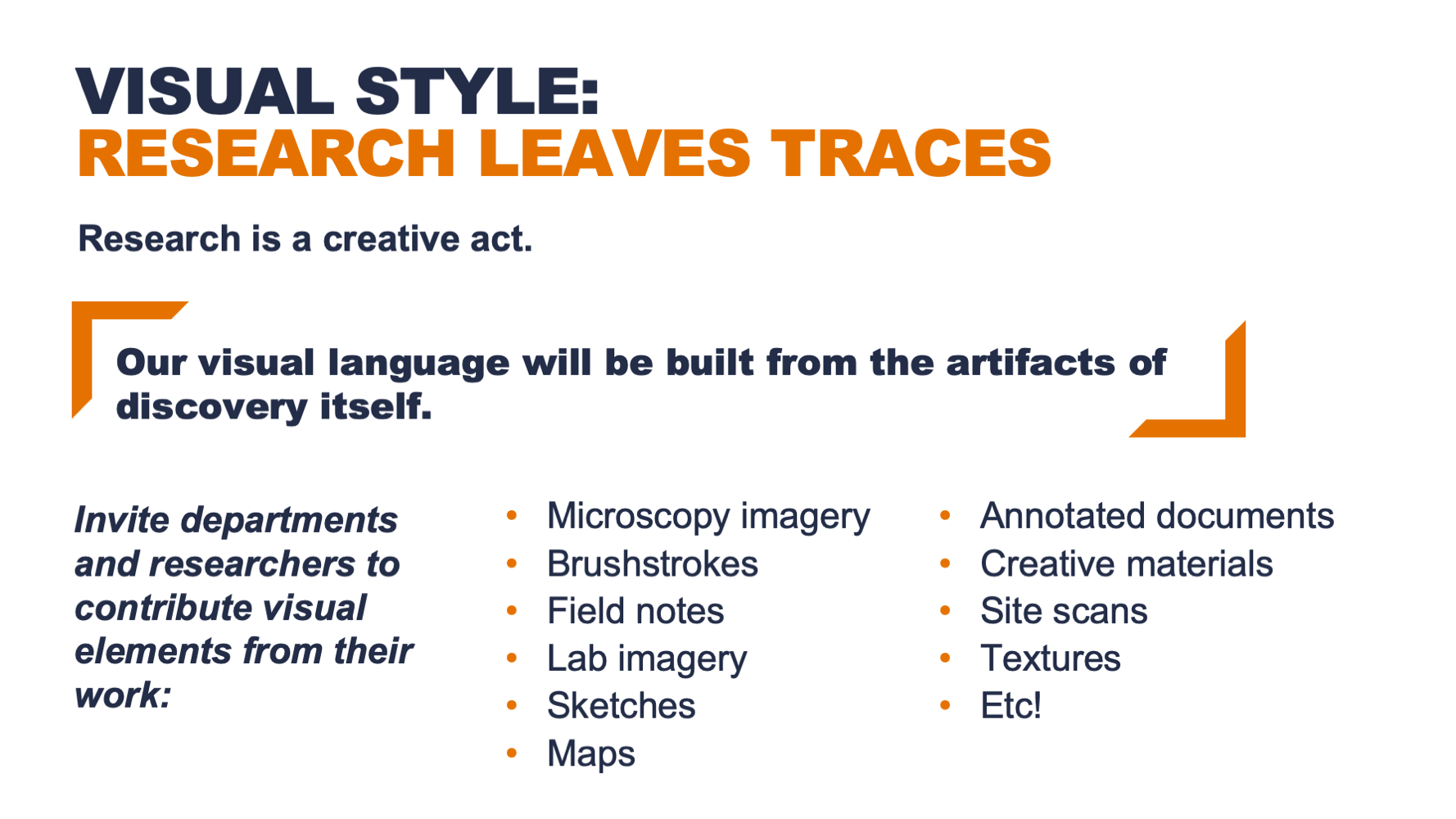
Alongside the report’s photography, I looked for ways to let the research itself supply the visuals. That meant using scans and maps submitted by researchers, building photo illustrations and collages from research and archival materials, and photographing researchers with objects from their own work.
When possible, I let scientific imaging and data from the research itself carry the visuals. Included on pages 28 to 29 is a photo illustration I created for the AI section opener, alongside heritability maps and tractography images submitted by UVA researchers, which I laid out and captioned for the report.
In some spreads, my visual language was built from the artifacts of discovery itself, as I invited researchers and departments to contribute visual elements from their own work for the final product. Included on page 10 is a collage I created from digitized documents and images sourced from the Center for Digital Editing’s projects, spanning the founding era through the civil rights movement.
In other spreads, I photographed researchers with objects from their own work, so their stories begin with what they study. Included on page 13 is historian David Singerman with a polariscope, a device once used to calculate the purity of sugar, the topic of his book Unrefined.
Collaboration & Delivery: Moving fast without losing the vision
A strong creative vision is only as effective as its execution. Delivering a 55-page publication in about two months, alongside other large projects including the final stages of Major Maps, meant deciding early and aligning stakeholders quickly.
With support from Research leadership, I presented the concept and design directions to the associate deans and secured alignment at three stages: buy-in on the initial creative pitch, feedback on spread designs for the first Research in Action section, and final sign-off on the completed report. I worked with Russ Bahorsky to shape and refine written content and with Evan Kutsko to align photography with the project’s creative direction. I also designed all spreads, edited photos, created graphs and charts, sourced printers, secured quotes, and completed final quality control checks. Consolidating feedback at each checkpoint kept writing, photography, illustration, and print moving together, so the original vision carried through to final delivery.
Impact: A new framework for research storytelling
The 2026 Research Report brought a new editorial vision to life in 55 pages, combining research storytelling, original photography, digital illustration, and a cohesive visual system. The initial print run of 1,000 copies was distributed across Arts & Sciences, the broader University, and to 200 deans nationwide.
Building on the inaugural 2025 edition, the project established a more flexible approach to communicating the breadth of research across Arts & Sciences. Its editorial structure connects individual achievements to larger themes, creating room to highlight both the College's academic strengths and emerging areas of investment while preserving the distinctive stories behind the work.
The result is a foundation for future editions that can evolve with the College's priorities without losing sight of the people, ideas, and discoveries that make its research distinctive.